Contact us
- Office of the Vice-Chancellor
- The Chancellery
- 19 Eastern Road, Macquarie University
- T: +61 2 9850 7440
Macquarie University is distinctly different to other universities. What we have here is truly unique and continues to inspire me as Macquarie’s leader.
With a strong tradition of innovation and discovery, we continue to break new ground. We are both a local, and an international university, progressive and influential, but at our heart is a focus on community and partnership.
While just over 57 years young, the achievements made in those years are remarkable. These achievements continue to drive us to explore, evolve and excel. Our shared purpose is to foster a culture of transformative learning and life experiences in a research enriched environment. In just a few decades we have emerged to a position of striking innovation in education and world-leading excellence in research, ranking in the top 1% of Universities worldwide.
We enjoy a deep sense of purpose of service and engagement. This is evident in the quality of our industry, community and Indigenous collaborations, the vibrancy and diversity of our University village, and ongoing commitment to student success to empower lives, now and into the future.
As the fifth Vice-Chancellor and President of Macquarie University, I am proud to lead this University built upon integrity and shared ambition, and its community, a source of strength and connectedness that sets us apart.
I look forward to welcoming you onto our beautiful campus.
Professor S. Bruce Dowton
MBBS MD FACMG FRACP FAICD FRSN
Vice-Chancellor & President
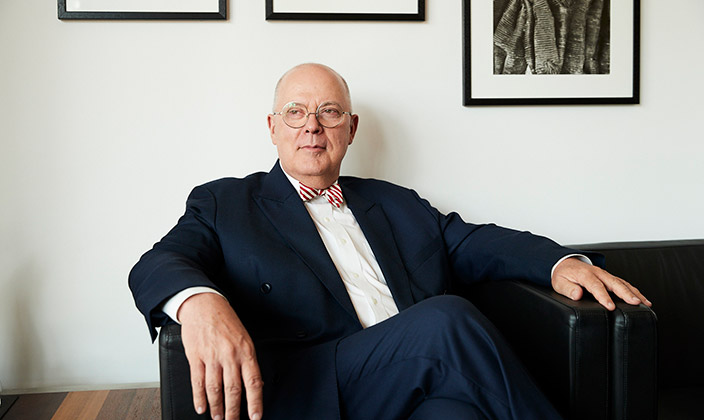
“It is within times of change that the importance of community comes into its own. One of the greatest strengths of Macquarie is its sense of community. This is something very unique to our University.”
Professor S. Bruce Dowton is the fifth Vice-Chancellor and President of Macquarie University. He joined the University in September 2012. During his first year he led a highly consultative process to develop a long-term strategic framework for the University, establishing an ethos of service and engagement at the heart of its learning, teaching and research activities. The framework has subsequently enabled a dramatic improvement in research performance, a synthesis of traditional and technological learning and teaching activities, deeper relationships with corporate and industry partners, significantly enhanced philanthropic giving and a series of multi-million-dollar capital works on campus. Professor Dowton’s ability to clarify complexity, and highly engaging personal style, have since become hallmarks of his Vice-Chancellorship.
As we adapt to this new world, the pioneering spirit of innovation that founded this University 57 years ago, continues to guide us today.
This is a dynamic time for Macquarie University amidst such a changing landscape.
A short welcome message from Professor S Bruce Dowton, Vice-Chancellor and President, Macquarie University to new members of the Macquarie University community.
Watch video
This is a dynamic time for Macquarie University
View allRead the biography of Professor S Bruce Dowton
View allLearn from our research experts
View all